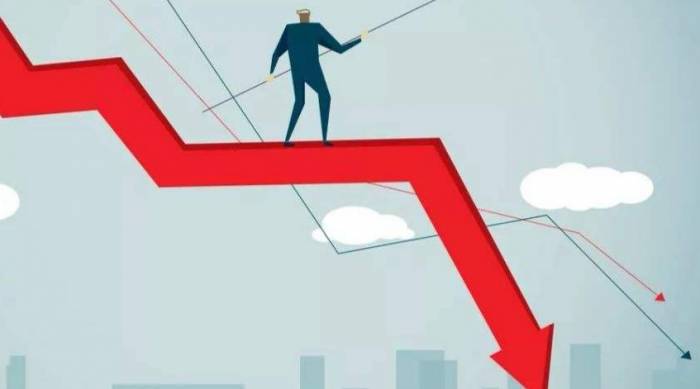
Let's cut to the chase. The United States national debt is over $34 trillion. It's a number so vast it feels abstract, like counting stars. But every taxpayer, investor, and retiree should be asking one concrete question: Is the US headed towards a debt crisis? The short answer isn't comforting. We're not on the brink of a Greece-style collapse tomorrow, but we are driving full-speed toward a fiscal cliff where our choices become painfully limited—higher taxes, lower benefits, or a devalued dollar. This isn't partisan alarmism; it's the cold, hard math of deficits that consistently outpace economic growth.
I've followed federal budgets for two decades. The most common mistake people make is conflating the debt ceiling political theater with the actual, silent crisis of unsustainable debt accumulation. The former makes headlines; the latter slowly erodes economic resilience. This article won't just rehash debt statistics you can find anywhere. We'll dissect the engine driving the debt, explore the realistic—not sensational—scenarios for a crisis, and explain why the common advice to "just ignore it, they'll never default" might be the riskiest bet of all.
What You'll Find in This Deep Dive
- The Debt by the Numbers: Beyond the $34 Trillion Headline
- The Primary Drivers: Why the Deficit is Structural, Not Cyclical
- What a "Debt Crisis" Actually Looks Like: Three Realistic Scenarios
- America's Ace Card: The Dollar's Unique (But Vulnerable) Status
- Is There a Path Forward? Solutions Beyond Political Gridlock
- Your Debt Crisis Questions, Answered
The Debt by the Numbers: Beyond the $34 Trillion Headline
Tossing around trillions is meaningless without context. The key metric economists watch is debt-to-GDP ratio—the size of the debt compared to the nation's total economic output. It's like comparing your mortgage to your annual salary.
| Year | Federal Debt Held by Public (approx.) | Debt-to-GDP Ratio | Key Event |
|---|---|---|---|
| 2000 | $3.4 Trillion | ~35% | Budget Surpluses |
| 2010 | $9.0 Trillion | ~90% | Post-2008 Financial Crisis |
| 2020 | $21.0 Trillion | ~100% | COVID-19 Pandemic Response |
| 2024 | $27.0 Trillion | ~99% | Persistent Structural Deficits |
| 2034 (Projected) | $48.3 Trillion | ~116% | Congressional Budget Office Baseline |
Look at that projection. The Congressional Budget Office (CBO), a non-partisan agency, forecasts the ratio hitting 116% within a decade under current law. That surpasses the WWII peak. The scary part? This projection assumes no new emergencies—no pandemics, no major wars, no deep recessions. It's the calm-weather forecast, and it's still stormy.
The cost of servicing this debt is the canary in the coal mine. In 2023, net interest payments surpassed $650 billion. By 2034, the CBO projects interest will be the single largest line item in the federal budget, exceeding defense spending or Medicare. We're borrowing money just to pay the interest on money we've already borrowed. It's a vicious cycle that crowds out spending on everything else—infrastructure, research, education.
Here's the subtle error most commentators miss: They focus on total debt but ignore the composition of creditors. A growing share of US debt is held by domestic entities like the Federal Reserve and US banks, not foreign nations like China and Japan. This changes the crisis dynamic. A loss of foreign confidence causes different problems (a rapid dollar sell-off) than a loss of domestic confidence (which could disrupt the entire US banking system).
The Primary Drivers: Why the Deficit is Structural, Not Cyclical
This isn't a temporary problem caused by a recession. We run massive deficits even when the economy is strong and unemployment is low. The engine has three big, stubborn cylinders.
1. Mandatory Spending on Autopilot
Nearly two-thirds of the budget is "mandatory" spending on programs like Social Security, Medicare, and Medicaid. Their costs are driven by demographics (an aging population) and healthcare inflation, not annual congressional votes. As a share of the economy, these programs are simply growing faster than the tax base that funds them. Fixing this requires politically toxic changes—raising the retirement age, modifying benefit formulas, or controlling healthcare costs in ways that anger powerful industries.
2. A Tax Code Full of Leaks
Federal revenues as a percentage of GDP have bounced between 16% and 20% for decades, despite wild fluctuations in tax rates. Why? The tax base is eroded by countless deductions, credits, and loopholes (politely called "tax expenditures"). The mortgage interest deduction, preferential rates for capital gains, and deductions for employer-sponsored health insurance cost over $1.5 trillion annually. Both parties add new credits while fiercely defending existing ones that benefit their constituencies. Closing these to broaden the base and lower rates is the economist's dream and the politician's nightmare.
3. The Discretionary Spending Deadlock
What's left is "discretionary" spending—defense and everything else (education, transportation, science). This is the part Congress fights over every year. But here's the kicker: even if you eliminated all non-defense discretionary spending, you still wouldn't balance the budget due to the growth in mandatory programs and interest. The debates over foreign aid or arts funding are fiscal rounding errors. The real money is in the untouchable programs.
The political system is perfectly wired to make this worse. There's a permanent incentive to promise benefits and tax cuts, and a permanent disincentive to pay for them. The bill always gets sent to the future.
What a "Debt Crisis" Actually Looks Like: Three Realistic Scenarios
Hollywood imagines a debt crisis as a sudden, chaotic default where ATMs shut down. That's extremely unlikely. The US can always print dollars to pay its nominal debts. The real crisis would be slower, more insidious, and manifested in one of these ways.
Scenario 1: The Inflation Tax Acceleration. This is the most probable path. As debt burdens grow, the government and the Federal Reserve face immense pressure to keep interest rates artificially low to make borrowing cheaper. This monetization of debt—effectively printing money to buy government bonds—devalues the currency. Your savings and fixed income lose purchasing power. It's a hidden tax on everyone who holds dollars. We got a preview in 2021-2023. A full-blown scenario would see inflation become entrenched, not transitory.
Scenario 2: The Sudden Confidence Shock. One day, a major creditor—perhaps a sovereign wealth fund or a central bank—decides the risk/reward of holding US Treasuries is no longer worth it. They don't see a credible political plan to curb deficits. They start selling, not in a panic, but as a strategic shift. Others follow. Bond prices fall, and yields spike dramatically. The cost of a 30-year mortgage jumps to 10%. Corporate borrowing freezes. The Fed is trapped: raising rates to defend the bond market crashes the economy; keeping rates low accelerates inflation and the sell-off. This is a liquidity crisis for the world's benchmark asset.
Scenario 3: The Fiscal Crunch and Brutal Trade-offs. No dramatic event occurs, but the weight of interest payments forces impossible choices. Congress is forced to slash defense spending to dangerous levels, make steep across-the-board cuts to Social Security and Medicare benefits, or implement massive tax increases—likely all three at once, during an economic downturn. Social and political instability follows. This is a crisis of lost optionality and declining living standards.
America's Ace Card: The Dollar's Unique (But Vulnerable) Status
This is why the US isn't Greece. The US dollar is the world's primary reserve currency. Global trade in oil, commodities, and most financial contracts is priced in dollars. This creates a built-in, constant demand for dollar-denominated assets like US Treasuries. It gives the US an "exorbitant privilege"—the ability to borrow cheaply in its own currency.
But this privilege is a trust, not a right. It's built on the perception of US economic stability, the rule of law, and deep, liquid financial markets. If the world starts to see US fiscal policy as reckless, that trust erodes. Alternatives exist. The euro is a stable, if imperfect, alternative. China's yuan is increasingly used in bilateral trade. Digital assets, while volatile, offer a glimpse of a future beyond any single nation's currency.
The dollar's status buys time, but it also creates a dangerous complacency in Washington. It allows politicians to kick the can further down the road than any other country could. The risk isn't that the dollar collapses overnight; it's that its dominance slowly erodes by 10% or 20%, enough to meaningfully increase borrowing costs and reduce American geopolitical leverage. We might not notice until it's gone.
Is There a Path Forward? Solutions Beyond Political Gridlock
It's not hopeless, but the solutions are politically painful and require bipartisan compromise, something in short supply. Meaningful action would likely involve a package with elements from both sides of the aisle:
On the spending side: Modestly adjusting the eligibility age for Social Security and Medicare for future retirees (not current ones), tied to increases in life expectancy. Implementing true cost-control measures in healthcare, like negotiating drug prices across all government programs and moving toward value-based care models.
On the revenue side: Broadening the tax base by capping or eliminating some of the largest tax expenditures that primarily benefit high earners. A modest carbon tax could raise significant revenue while addressing another long-term risk. The goal should be to stabilize and then gradually reduce the debt-to-GDP ratio, not achieve a zero deficit overnight.
The mechanism matters. Waiting for regular order in Congress has failed. Options include a bipartisan fiscal commission (like the 1983 Greenspan Commission that saved Social Security) whose recommendations receive an expedited, up-or-down vote in Congress, or enforceable multi-year deficit reduction targets.
The lack of a crisis today is the biggest obstacle to action. Politicians respond to immediate fires, not slow-moving trains coming down the track. By the time the market forces a crisis, the solutions will be far more severe.
Your Debt Crisis Questions, Answered
So, is the US headed towards a debt crisis? The trajectory says yes. The timing and form are uncertain. The unique role of the dollar provides a buffer, but it's being used as an excuse for inaction. A crisis isn't a binary switch; it's a continuum of worsening options, higher costs, and diminished resilience. The warning signs—persistent high deficits in good times, rising interest costs, and political paralysis—are all flashing. Ignoring them because a collapse isn't imminent is the very behavior that guarantees a harder landing later. The question isn't just about economics; it's about what kind of future—with what level of freedom, security, and opportunity—we choose to finance today.