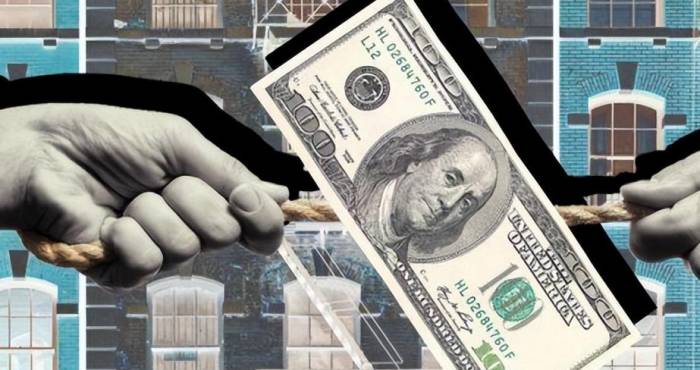
You see the headline flash across your screen: "Fed Raises Rates." Your stomach drops. A familiar, icy fear creeps in. Is this it? Is this the trigger that finally sends the market off a cliff, wiping out your retirement savings and portfolio gains? The question "Will the stock market crash if the Fed raises interest rates?" isn't just academic—it's a primal fear for anyone with money in the market. Having watched this dynamic play out over multiple cycles, I can tell you the answer is far more nuanced than a simple yes or no. A rate hike is less a detonator and more a shift in the weather patterns for the entire financial ecosystem. Let's cut through the panic and look at what actually happens.
What You'll Learn Inside
The Fed's Rate Hike Playbook: It's Not Just About the NumberThe Real Market Killer: It's Usually Not the FedHow to Navigate a Rate-Hiking Environment Like a ProYour Burning Questions AnsweredThe Fed's Rate Hike Playbook: It's Not Just About the Number
Everyone focuses on the 0.25% or 0.50% increase. That's the headline, but it's the
context that dictates the market's reaction. The market is a giant discounting machine. It's not reacting to today's news; it's reacting to the news relative to what it already expected.I remember sitting in a meeting with a seasoned portfolio manager during the 2018 hiking cycle. The Fed raised rates, as expected. The market dipped slightly, then rallied. "See?" a junior analyst said, "The market doesn't care." The portfolio manager shook his head. "It cares deeply," he corrected. "It just already priced in this exact move. The danger isn't in the hike itself. It's in the
pace and the
forward guidance that surprises everyone." That stuck with me.Here’s what the market is really assessing in that Fed statement:
The "Why" Behind the Hike: Is the Fed raising rates to cool an overheating economy with strong job growth? That's often seen as a validation of economic strength and can be absorbed well. Is it scrambling to catch up with runaway inflation that it previously misjudged as "transitory"? That signals policy error and erodes confidence.Future Projections (The Dot Plot): The Federal Open Market Committee's (FOMC) infamous "dot plot" of interest rate projections is often more volatile than the actual decision. A hawkish shift in these future projections—signaling more or faster hikes to come—can cause more immediate selling than the present action.Communication & Credibility: Does the Fed Chair sound confident and in control of the narrative, or uncertain and reactive? Jerome Powell's shift from dovish to hawkish in late 2021 created more market turmoil than the first rate hike itself because it represented a fundamental re-rating of the policy path.
The biggest mistake individual investors make is treating a rate hike as an isolated, shocking event. It's not. It's a single data point in a long, telegraphed narrative. The market's violent reactions usually come from a crack in that narrative, not from the act of lifting rates.
A Look Back: Rate Hikes and Market Returns
Let's ground this in data. The table below looks at periods of Fed rate hikes and the corresponding S&P 500 performance. The source for this analysis is a synthesis of data from the
Federal Reserve's own archives and market performance records.
| Hiking Cycle Period |
Total Rate Increase |
S&P 500 Performance During Cycle |
Key Context |
| 2004-2006 |
+4.25% |
+15.6% |
"Measured pace" hikes; strong global growth. |
| 2015-2018 |
+2.25% |
+37.2% |
Very slow, well-telegraphed normalization from zero. |
| 2022-2023 |
+5.25% |
-10.2% (through peak rates) |
Aggressive, front-loaded hikes to combat 40-year high inflation. |
Notice something crucial? Two of the three major modern hiking cycles saw the stock market
rise significantly. The 2022 cycle was the exception because it combined the most aggressive pace in decades with the shock of a war-induced energy crisis and persistent inflation. The rate hikes didn't cause the bear market alone; they were the tool used to address the root cause—inflation—which was itself the market poison.
The Real Market Killer: It's Usually Not the Fed
This is the non-consensus view you won't hear from most pundits: The Fed rarely engineers a crash directly. More often, it's the thing the Fed is
responding to that does the damage, and the Fed's belated response simply removes the cushion.Think of the economy as a patient. A fever (high inflation) is the disease. Raising rates is the strong antibiotic. The antibiotic doesn't cause the illness, but it can make the patient feel weak and nauseous (slower growth, market volatility) as it fights the infection. The market crashes when investors realize the fever is much worse than they thought,
and the treatment will be painful.The true catalysts for major bear markets are typically:
Valuation Excesses: Markets trading at extreme P/E ratios, fueled by speculative euphoria and cheap money. The Fed taking away the cheap money exposes the overvaluation.Economic Shock: A true exogenous event: a pandemic, a major war disrupting global supply chains, a systemic financial crisis like 2008. The Fed may cut or raise rates in response, but it's not the origin.Profit Recession: Corporate earnings collapsing. Higher rates can pressure earnings by increasing borrowing costs and slowing demand, but the primary driver is a deterioration in the business environment itself.In 2022, the narrative was "The Fed is causing the crash." A more accurate read was, "The market is crashing because inflation is forcing the Fed to abruptly end the era of free money, which will slam the brakes on an economy priced for perpetual acceleration." The distinction matters for your strategy.
How to Navigate a Rate-Hiking Environment Like a Pro
Okay, so a hike isn't an automatic sell signal. What do you actually do? You shift your mindset from prediction to preparation. I've found these frameworks more useful than trying to time the market.
1. Sector Rotation is Your Friend (Not Stock Picking)
Higher rates don't hit all stocks equally. They're a headwind for certain sectors and a tailwind or neutral for others. Instead of asking "Should I sell everything?", ask "Where does money flow in this new environment?"
Typical Relative Underperformers: High-growth tech (especially unprofitable companies), long-duration assets like utilities, and real estate (due to higher mortgage costs). These sectors are most sensitive to discount rate changes.
Typical Relative Outperformers: Financials (banks make more on net interest margin), energy (often inflation-resilient), and certain consumer staples. These sectors often have pricing power or directly benefit from higher rates.This isn't about ditching great companies, but about understanding that the market's favor rotates. Your growth stock might be dead money for a year or two while value stocks lead.
2. Focus on Quality and Cash Flow
When money is no longer free, company fundamentals scream. Speculative stories crumble. This is the time to audit your portfolio for:
Strong Balance Sheets: Low debt, high cash. Companies that don't need to refinance expensive debt in a high-rate world have a massive advantage.Consistent Free Cash Flow: Companies that generate real cash, not just accounting profits. This cash can be used to buy back shares, pay dividends, or invest internally without begging from the debt markets.Pricing Power: Can the company raise prices to offset its own rising costs without losing customers? This is the ultimate inflation and rate-hike shield.3. Revisit Your Bond Allocation
This is critical. The old 60/40 portfolio took a beating in 2022 because both stocks and bonds fell. But rising rates eventually reset bond yields at more attractive levels. Short-term Treasuries and high-quality corporate bonds start paying meaningful income again. This isn't exciting, but it provides ballast. Having a portion of your portfolio in assets that now yield 4-5% risk-free changes your need to chase risk in equities.
Your Burning Questions Answered
If the Fed pauses hikes, is it an automatic 'all clear' signal for stocks?Not at all. This is a common trap. A pause often means the Fed is waiting to see the lagged effects of its previous hikes. The market can rally on the pause news, but then faceplant if the economic data that follows shows the economy slowing sharply or earnings collapsing. The pivot from hiking to cutting is the true relief valve, and that usually only comes when something is breaking. A pause is just a moment to catch your breath in the middle of a marathon.What's a specific sign that rates are actually starting to hurt the market's foundation?Watch credit spreads. Not the stock market headlines. When the yield difference between corporate junk bonds and ultra-safe Treasury bonds starts widening rapidly, it's a flashing red light from the bond market—the so-called "smart money." It signals rising fear of corporate defaults. This credit stress typically precedes major equity downturns by weeks or months. You can find this data on the
St. Louis Fed's FRED database. A calm stock market with widening credit spreads is a major divergence to heed.Should I just move to cash until the Fed is done hiking?This is the classic panic move that destroys long-term returns. Timing the exit and the re-entry perfectly is nearly impossible. You're likely to sell after a decline and miss the initial, often violent, rebound. A better approach is systematic rebalancing. If your target is 70% stocks and 30% bonds, and a sell-off pushes you to 65/35, use your fear as a signal to
buy more stocks to get back to 70/30. This forces you to buy low, even when it feels terrible. Cash has a role as dry powder for this, not as a permanent hiding place.The interplay between the Federal Reserve and the stock market is a complex dance, not a simple cause-and-effect chain. A rate hike is a tool, not a verdict. By understanding the context, focusing on the real economic drivers, and adjusting your portfolio's composition—not fleeing it entirely—you can navigate these periods not just with less fear, but with strategic clarity. The market doesn't crash because rates go up. It stumbles when the story it's been telling itself about endless easy money and perpetual growth suddenly, and forcefully, changes. Your job is to listen for the cracks in that story, not just the sound of the Fed's gavel.